
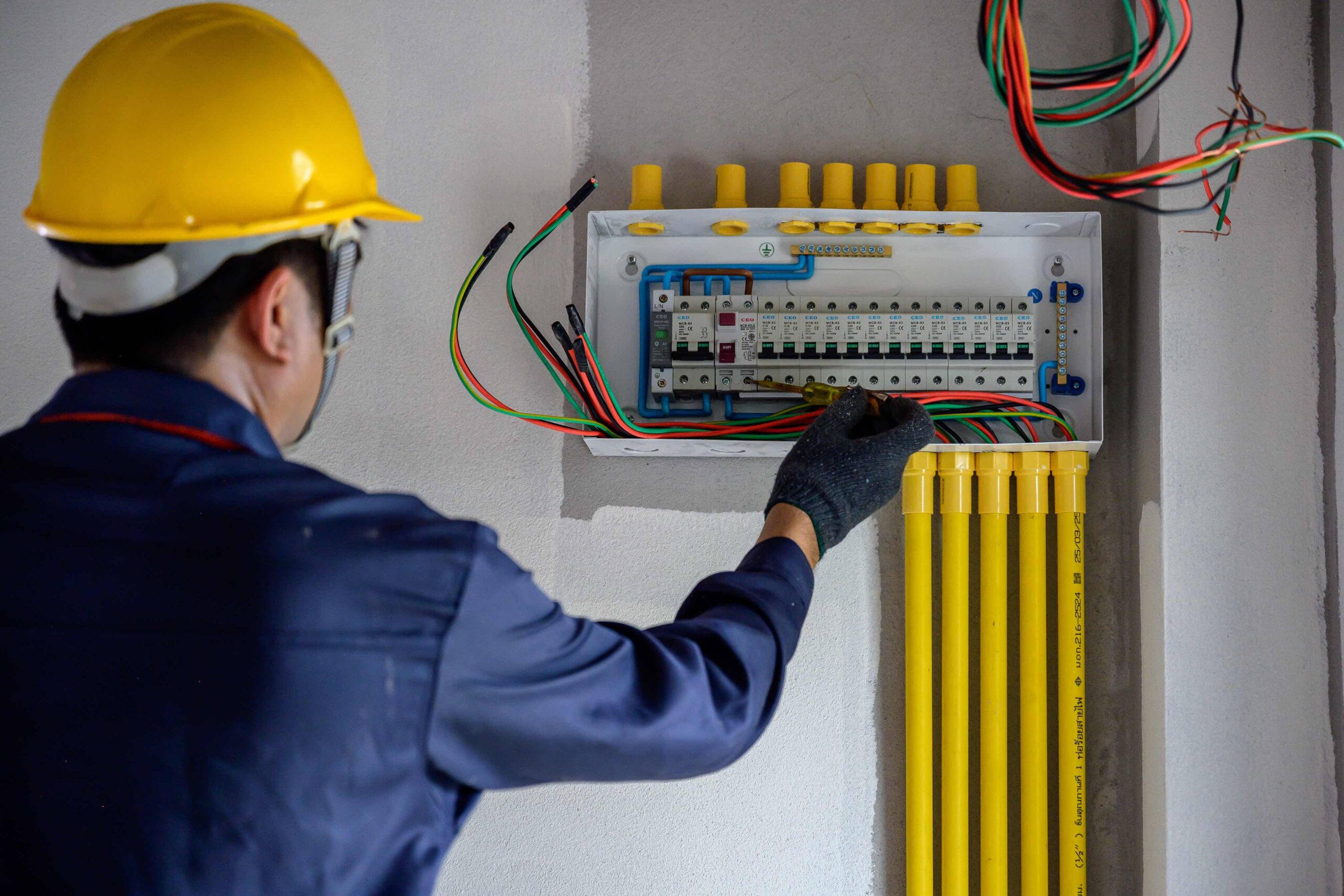

Commercial buildings accumulate electrical load the way old houses accumulate clutter: gradually, incrementally, and without any single addition feeling significant enough to prompt a systematic reassessment. A new server rack here. An additional rooftop HVAC unit there. A bank of EV chargers in the parking structure, added in response to a corporate sustainability commitment. LED retrofit lighting that reduced individual circuit loads but added new control panels to the distribution system. A commercial kitchen expansion that brought three new pieces of high-draw cooking equipment.
Each of these additions was approved, permitted, and wired correctly by licensed electricians who confirmed that the specific circuit they were connecting had sufficient capacity. But the question of whether the panel feeding those circuits, and the distribution system feeding that panel, retained adequate headroom after the cumulative additions is a different question, one that is asked less consistently and answered less reliably.
The answer, in many commercial buildings more than fifteen years old, is increasingly: no.
What panel capacity actually means.
A distribution panel is engineered to handle a specific maximum load: the main breaker rating defines the maximum continuous current the panel can carry, and the sum of all branch circuit breakers installed in the panel cannot exceed this main breaker rating by more than a defined factor. Beyond the main breaker capacity, the bus bar, the copper or aluminum conductor that distributes current to each branch circuit breaker slot, has its own current rating, and the enclosure is sized to dissipate the heat generated by the current flowing through it.
When load additions push the total connected load toward or past these design limits, the effects are not always dramatic or immediate. They are thermal, progressive, and cumulative. Conductors and connections running near their rated capacity generate more heat than those operating with comfortable margin. This elevated heat accelerates the oxidation of contact surfaces, softens insulation, and progressively degrades the mechanical integrity of terminations. The panel that was operating well within design limits fifteen years ago may now be operating at sustained loads that are producing thermal stress it was never designed to manage indefinitely.
The circuit breaker as an early warning system that goes unread.
One of the clearest signals of an overloaded electrical system is nuisance tripping, circuit breakers that open under loads that should be within their rated capacity. This happens because thermal-magnetic circuit breakers are sensitive to sustained elevated temperatures as well as to instantaneous overcurrent. A breaker operating in a panel that is running hot will trip at lower current thresholds than its nameplate rating suggests, because the ambient temperature inside the enclosure is adding to the thermal load the trip mechanism is sensing.
Facilities staff who experience nuisance tripping almost invariably respond by replacing the breaker, assuming it has failed, or by resetting it repeatedly until the pattern becomes severe enough to warrant calling an electrician. What they rarely do is interpret the tripping pattern as a system-level signal: the panel is telling them that the thermal environment has changed and that it is managing loads at the edge of its designed operating range.
When the replaced breaker trips again under the same conditions, the diagnosis is confirmed, but frequently still misread as a component problem rather than a system problem. The cycle continues until a more serious event, a sustained fault, a failed connection, an overheated bus bar, makes the underlying issue impossible to ignore.
The load addition that finally tips the balance.
The scenario that brings previously manageable overloading into acute territory is usually another load addition: the EV charger that gets installed in a building where the panel was already running at 85% of rated capacity, or the new tenant fit-out that requires circuits the panel no longer has available to give, or the HVAC upgrade that replaces a modestly-drawing older system with a high-efficiency unit that draws significantly more current during startup.
At this point, the incremental addition model breaks down entirely. There are no more available circuit breaker slots. The main breaker cannot accommodate additional load. The bus bar is operating at temperatures that are measurably accelerating its degradation. The only solutions are substantive: add a sub-panel fed from a higher-capacity source, replace the existing panelboard with one rated for higher continuous load, or shed existing loads to create capacity for the new ones.
All of these solutions are more expensive and more disruptive than they would have been if the panel had been upgraded when the load growth first began approaching its limits. The cost of addressing panelboard capacity proactively, before the available circuit slots are exhausted and before the thermal stress has years of accumulated degradation to show for it, is almost always significantly lower than the cost of addressing it reactively.
This is why sourcing replacement and upgrade panelboards efficiently matters: the decision to act, once finally made, is typically being made under time pressure. Sourcing circuit breaker panels from Essential Electric with same-day shipping capability means the gap between decision and restoration can be measured in days rather than weeks, a distinction that translates directly into reduced operational disruption for the building and its occupants.
The inspection gap that lets this pattern persist.
Routine electrical inspections of existing commercial buildings focus primarily on code compliance at the circuit level: conductor sizing, grounding, labeling, clearances, and the physical condition of visible equipment. Systematic assessment of whether panelboard capacity remains adequate for the building’s current actual load profile is not a standard component of routine electrical maintenance in most commercial settings.
This creates a gap in which the incremental load accumulation described above can proceed for years without triggering any formal evaluation. The building is inspected and found compliant. The individual load additions are permitted and approved. The aggregate effect on panel capacity goes unmeasured. And the thermal degradation accumulates silently until a component failure makes it visible, by which point the accumulation has been going on long enough to have made remediation substantially more complex than it needed to be.
