
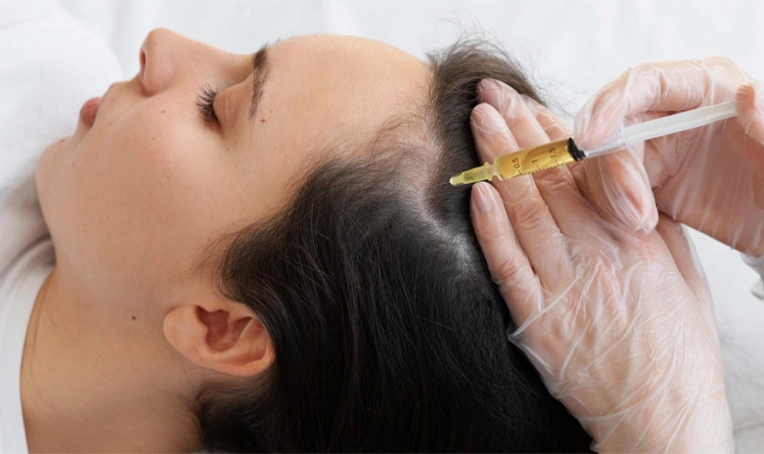

PRP for hair loss is a treatment that uses a concentrated portion of a patient’s own blood to address thinning hair. PRP, or platelet-rich plasma, treatments begin with a blood draw, after which the sample is spun in a centrifuge to separate the platelet-rich plasma from other components. Clinicians then inject this plasma into areas of the scalp affected by hair thinning. Candidacy for PRP depends on several measurable factors, and a clinical evaluation helps determine whether an individual matches the profile suited to this treatment.
Hair Follicle Health
Hair follicle health forms a primary measure in any PRP candidacy assessment. Because PRP for hair loss targets follicles that remain active, the condition of these structures determines treatment suitability. Clinicians examine follicle density during the evaluation, and candidates with some continued hair growth are often eligible. The presence of miniaturized follicles often signals early-stage hair loss.
Lifestyle Factors
Lifestyle factors contribute to the broader candidacy assessment for PRP. Diet, sleep, stress, and activity each influence the body’s general condition, and a clinician reviews these elements during the consultation. Since stress can have a significant effect, patients who report chronic stress may show patterns of hair shedding linked to that condition.
Smoking and alcohol consumption are also recorded during the intake process, since both habits relate to circulation and tissue function. A practitioner often gathers this information to build a complete profile of the patient. Consistent sleep supports the body’s regular cellular processes, and avoiding specific risky behaviors can increase the likelihood of PRP working.
Medication Usage
Medication usage is another category reviewed during a PRP assessment. Certain medications, including some anti-inflammatory drugs, affect platelet function and may alter how plasma behaves. Patients should disclose their current prescriptions during the consultation, and clinicians may request a break from certain drugs for a time.
Some treatments for existing medical conditions can influence eligibility, and a clinician weighs these against the proposed PRP protocol. Supplements and over-the-counter products are often noted as well. Because PRP needs specific baseline health markers, this step is determined on a case-by-case basis based on documented medical history.
Because hormone levels relate to certain hair loss patterns, hormonal medications should also be disclosed. A clinician examines how these prescriptions fit within the overall clinical picture, and the medication review produces a clearer understanding of patient suitability. Accurate reporting of all substances supports a precise assessment.
Scalp Condition
Scalp condition is examined closely as part of the candidacy review. A scalp affected by active infection, inflammation, or open lesions may not match the profile suited to treatment, and a clinician inspects the area for these signs. The skin’s texture and elasticity are also observed, since healthy scalp tissue provides a stable site for the procedure.
Conditions such as psoriasis or dermatitis are documented when present, since these affect the treatment area. A practitioner records the location and extent of any thinning, and this helps with injection planning. Scalp examinations may include close visual inspection alongside patient history.
Learn More About PRP for Hair Loss
Candidacy for PRP for hair loss depends on several existing factors, and a qualified clinician reviews these factors before beginning treatment. Since some individuals may need to change or pause medications for a time, working with other doctors may be recommended. Contact a specialized medical professional to schedule an evaluation for PRP.
