
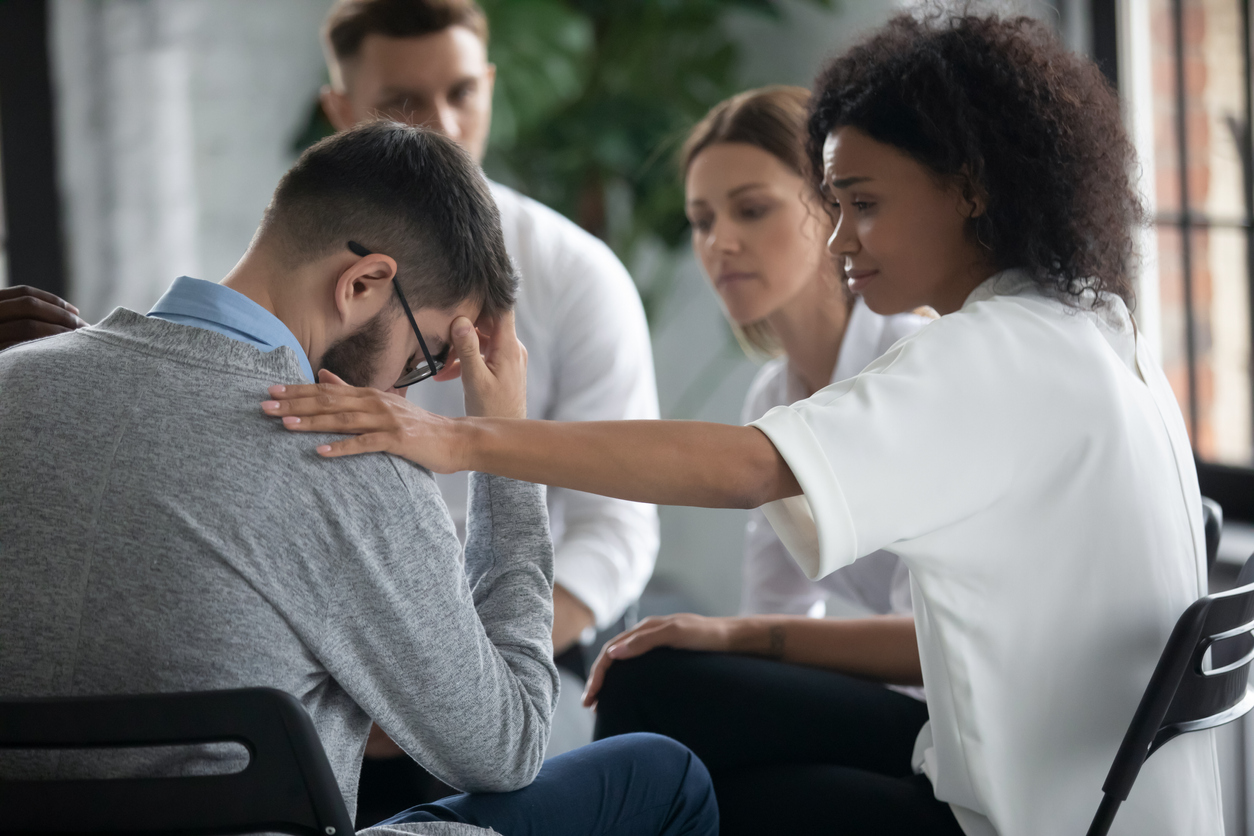

For an Ohio adult in the grip of substance use disorder – or for the family member frantically searching on their behalf – the hardest part is often not admitting the problem. It’s navigating a fragmented, confusing treatment landscape while the clock is running. Ohio has spent years at the center of the national overdose crisis, and the interplay between substance use disorders and untreated mental health conditions makes finding the right care genuinely high-stakes: an untreated co-occurring disorder raises the risk of relapse, medical complication, and, in the worst cases, fatal overdose. The recent federal debate over behavioral health funding – including the reversal of a plan to cut roughly $2 billion for mental health programs, as reported by The New York Times – underscores just how precarious access to quality care can be. Choosing well matters, and that is exactly what this comparison is built to help you do.
Our top pick is Legacy Healing Center Ohio for adults who need accredited, integrated residential dual diagnosis care without delay – it holds Joint Commission accreditation, is led by a quintuple-board-certified chief medical officer, and offers same-day admissions alongside insurance acceptance, making it the strongest all-around option for those who cannot afford to wait. The premium residential setting and integrated co-occurring model are what set it apart, though that upscale positioning does carry cost trade-offs for the underinsured. For adults who need medication-assisted treatment (MAT) in a more accessible outpatient or rural setting, Ohio Recovery Center is the strongest alternative. And for those near Columbus seeking inpatient dual diagnosis care close to home, Seacrest Recovery Center Ohio is the top choice.
Below, we rank the five best addiction and mental health treatment centers in Ohio for 2026, each chosen against a consistent set of criteria and each earning its place by leading a distinct segment. The methodology comes first, followed by an at-a-glance overview and the full ranked list.
What to Look For
Not every facility is right for every person. We evaluated each center against six criteria that reliably separate credible substance abuse treatment from marketing gloss.
Licensure and Accreditation
State licensure through Ohio MHAS is the floor. Third-party accreditation – Joint Commission or CARF – is the higher bar, signaling independently audited clinical standards.
Dual Diagnosis Capability
Because addiction so often co-occurs with a mental health condition, we prioritized facilities that treat both simultaneously through a genuine co-occurring recovery program rather than addressing substance use in isolation.
Insurance and Financial Accessibility
Insurance acceptance meaningfully reduces the barrier to entry. We favored centers that work with commercial plans and are transparent about coverage verification.
Admissions Speed
For someone in crisis, a multi-week intake wait can be the difference between recovery and relapse. Same-day or rapid admissions earned real weight here.
Clinical Staffing
We looked for medical oversight from addiction psychiatrists, licensed therapists delivering evidence-based and trauma-informed care, and programming that includes family therapy sessions.
Reputation and Program Fit
Finally, we weighed program reputation, transparency, and how clearly each facility fits a defined segment of need – no facility is best for everyone.
At-a-Glance Comparison
| # | Provider | Best For | Key Strength | Accreditation/Credential |
|---|---|---|---|---|
| 1 | Legacy Healing Center Ohio | Accredited luxury dual diagnosis residential | Same-day admissions + Joint Commission | Joint Commission accredited |
| 2 | Findlay Recovery Center | Residential addiction treatment, NW Ohio | Northwest Ohio regional access | State-licensed |
| 3 | River Rocks Recovery | Trauma-informed dual diagnosis, SW Ohio | Trauma-focused clinical model | State-licensed |
| 4 | Ohio Recovery Center | MAT + outpatient, rural Ohio | Medication-assisted treatment access | State-licensed |
| 5 | Seacrest Recovery Center Ohio | Inpatient dual diagnosis near Columbus | Columbus-area inpatient access | State-licensed |
The 5 Best Addiction and Mental Health Treatment Centers in Ohio
Ohio adults arrive at treatment with very different needs – some want a private, amenity-rich residential setting with fast intake, others need flexible MAT-based outpatient care that lets them keep working, and many are looking specifically for trauma-informed or dual diagnosis programming. The five centers below represent the strongest options across those distinct segments, and #1 is our overall top recommendation for comprehensive, accredited addiction and mental health treatment.
#1. Legacy Healing Center Ohio – Best For Accredited Luxury Dual Diagnosis Residential Treatment in Ohio
For Ohio adults who need accredited residential care that treats addiction and a co-occurring mental health condition together – and who need it quickly – this is the strongest all-around option on the list.
Based in Cincinnati at 4990 E Galbraith Rd and serving clients across Columbus, Cleveland, Dayton, Toledo, and surrounding communities, Legacy Healing Ohio positions itself as a comprehensive residential provider built around integrated dual diagnosis care. It is the only Joint Commission – accredited facility on this list, which matters: that credential reflects an independently audited standard of clinical quality that state licensure alone does not guarantee. Clinical leadership runs unusually deep for a private rehab – headed by quintuple-board-certified chief medical officer Dr. Ash Bhatt, the kind of specialist psychiatric oversight that supports genuinely medical treatment of substance use disorders rather than a one-size-fits-all program.
The practical differentiators are meaningful. Same-day admissions remove a barrier that derails many recoveries before they begin, and insurance acceptance reduces the financial friction that keeps people out of care. Programming pairs residential substance abuse treatment with trauma-focused therapy and family therapy sessions, delivered in an upscale, amenity-rich environment. The trade-off is honest: that premium positioning tends to mean higher out-of-pocket costs for anyone whose insurance coverage is thin, and the setting simply won’t appeal to everyone.
Pros:
- Joint Commission accreditation – the gold standard for behavioral health facilities and the only one on this list
- Quintuple-board-certified chief medical officer provides rare depth of clinical oversight
- Same-day admissions remove a critical barrier for adults in crisis
- Integrated co-occurring recovery program treats addiction and mental health simultaneously
- Insurance accepted, reducing financial friction for eligible clients
Cons:
- Luxury positioning likely means higher out-of-pocket costs for those with limited or no insurance
- Primary location is Cincinnati, which may require travel for clients in northeast Ohio (Cleveland/Akron area)
- Primarily residential/inpatient – not the right fit for those who need outpatient-only or step-down care
- Amenity-rich setting may not suit clients who prefer a clinical or faith-based environment
Who it’s best for: Adults across Ohio – especially in the Cincinnati metro – seeking accredited, integrated residential dual diagnosis treatment with fast intake and workable insurance coverage.
#2. Findlay Recovery Center – Best For Specialized Residential Addiction Treatment in Northwest Ohio
For adults in Northwest Ohio who want an immersive residential program without traveling across the state, Findlay Recovery Center fills a real regional gap.
Located in Findlay, the center delivers structured residential substance use disorder treatment for a part of Ohio that has historically had fewer inpatient options. Its value is largely geographic and structural: a distraction-free residential environment close to home, with a clear program focus squarely on addiction. For rural and small-city residents in the region, that proximity can be the deciding factor in whether someone enters treatment at all.
The trade-offs are worth understanding. Findlay is a state-licensed facility and, at the time of writing, does not appear to carry Joint Commission accreditation. Its dual diagnosis programming may also be less comprehensive than that of dedicated co-occurring specialists, so applicants with a significant mental health condition should confirm the depth of that support before committing.
Pros:
- Strong regional presence in Northwest Ohio, reducing travel burden for that population
- Immersive, distraction-free residential environment
- Clear, focused addiction treatment structure
- Accessible option for rural and small-city Ohio adults with few nearby alternatives
Cons:
- Does not appear to hold Joint Commission accreditation – verify directly
- Dual diagnosis programming may be less comprehensive than at dedicated co-occurring centers
- Luxury amenities and premium staffing are not the focus
- Limited geographic reach for central or southern Ohio residents
Who it’s best for: Northwest Ohio adults who want structured residential addiction treatment close to home.
#3. River Rocks Recovery – Best For Trauma-Informed Dual Diagnosis Care in Southwest Ohio
For clients whose addiction is rooted in trauma, River Rocks Recovery builds its Southwest Ohio program around trauma-informed care rather than treating it as an afterthought.
The clinical premise is sound and increasingly mainstream: many substance use disorders are downstream of PTSD or adverse experiences, and treating the addiction without addressing that root cause tends to produce fragile results. River Rocks integrates trauma-focused modalities throughout its dual diagnosis programming, which suits clients who need their mental health condition addressed alongside their substance use. Public health authorities have long framed addiction as a treatable medical condition rather than a moral failing – a framing reflected in Ohio’s own state treatment resources – and a trauma-informed approach aligns closely with that evidence base.
Its Southwest Ohio location is convenient for Dayton-area and Cincinnati-adjacent clients who want an alternative to larger luxury centers. As a smaller, more specialized facility, though, it offers less programming breadth, and prospective clients should verify admissions speed and insurance options directly rather than assuming rapid intake.
Pros:
- Specialized trauma-informed model well-suited to trauma-presenting clients
- Genuine dual diagnosis capability addressing co-occurring mental health conditions
- Southwest Ohio location accessible for Dayton and Cincinnati-adjacent clients
- Focused clinical niche may produce stronger outcomes for the right client
Cons:
- Smaller facility profile means less breadth of programming than a full-service center
- May not offer same-day admissions or rapid intake
- Luxury amenities and premium residential environment are not the focus
- Insurance acceptance and financial assistance should be verified directly
Who it’s best for: Southwest Ohio adults whose addiction is tied to trauma and who want a dual diagnosis program built around that reality.
#4. Ohio Recovery Center – Best For Medication-Assisted Treatment (MAT) and Outpatient Care in Rural Ohio
For Ohioans who need medication-assisted treatment and the flexibility to keep working and living at home, Ohio Recovery Center addresses a segment that residential luxury programs simply do not.
Medication-assisted treatment (MAT) – using FDA-approved medications such as buprenorphine or naltrexone alongside counseling – is one of the most evidence-backed approaches for opioid and alcohol use disorders. Ohio Recovery Center pairs that model with outpatient and intensive outpatient (IOP) programming, plus co-occurring disorders treatment within an outpatient framework. The design deliberately serves rural and geographically dispersed Ohioans who cannot access or afford residential care – a population that federal agencies including the Substance Abuse and Mental Health Services Administration (SAMHSA) have repeatedly flagged as underserved.
The limitations are inherent to the level of care. Outpatient MAT is not appropriate for someone at high risk of severe withdrawal or with significant medical complexity, who may need residential stabilization first. And while the model addresses co-occurring conditions, that support is generally less intensive than what a full residential dual diagnosis program provides.
Pros:
- Evidence-based MAT model effective for opioid and alcohol use disorders
- Outpatient structure lets clients maintain work, family, and community ties
- Addresses a genuine access gap for rural Ohioans
- Lower cost barrier than residential luxury programs
Cons:
- Not appropriate for clients who need residential-level structure and supervision
- Co-occurring mental health treatment may be less intensive than a full dual diagnosis residential program
- Dispersed service model may mean fewer on-site amenities and resources
- Clients with severe withdrawal risk may need a higher level of care first
Who it’s best for: Rural or underserved Ohio adults who need MAT and outpatient flexibility rather than inpatient care.
#5. Seacrest Recovery Center Ohio – Best For Inpatient Dual Diagnosis Treatment Near Columbus
For central Ohio residents who need inpatient care and cannot travel to Cincinnati, Seacrest Recovery Center Ohio offers accessible dual diagnosis treatment near Columbus.
Location is the headline advantage. Serving the state’s largest metropolitan population, Seacrest provides a residential-level, 24-hour inpatient option for adults who need structured supervision but want to stay close to home. Its dual diagnosis model integrates substance use and mental health care – the right framing for the many clients whose conditions are entangled rather than separate.
As with several centers on this list, Seacrest is state-licensed and does not appear to hold Joint Commission accreditation. Its national profile is smaller than that of accredited luxury facilities, and amenities and staffing depth may not match larger centers. Same-day admissions availability should be confirmed at intake, as timelines may be standard rather than expedited.
Pros:
- Columbus-area location highly accessible to central Ohio’s population
- Inpatient dual diagnosis model treats mental health and addiction together
- Residential-level alternative for those who cannot travel to Cincinnati
- Structured environment supports clients needing 24-hour clinical oversight
Cons:
- Does not appear to hold Joint Commission accreditation – verify directly
- Less established national profile than accredited luxury centers
- Amenities and staffing depth may not match larger facilities
- Same-day admissions availability should be confirmed
Who it’s best for: Adults near Columbus who need inpatient dual diagnosis treatment without traveling out of the region.
Frequently Asked Questions
What’s the Difference Between Inpatient and Outpatient Addiction Treatment?
Inpatient (residential) treatment means living at the facility with 24-hour supervision – the model used by Legacy Healing Center Ohio and Seacrest. It suits clients who need medical stabilization, a distraction-free environment, or intensive co-occurring care. Outpatient programs, like those at Ohio Recovery Center, let clients live at home and attend scheduled sessions, preserving work and family ties. Outpatient works well for milder substance use disorders or as step-down care, but it is not appropriate for anyone facing severe withdrawal risk or acute medical complexity, who generally needs inpatient care first.
Which Is Best for Dual Diagnosis and Co-Occurring Disorders?
Dual diagnosis care treats a substance use disorder and a mental health condition at the same time, which is essential because treating one while ignoring the other often fails. Among these centers, Legacy Healing Center Ohio offers the deepest accredited residential dual diagnosis programming, River Rocks Recovery specializes in trauma-informed dual diagnosis care in Southwest Ohio, and Seacrest provides accessible inpatient dual diagnosis treatment near Columbus. The right fit depends on your location, whether you need residential care, and how central trauma is to your situation.
What’s the Difference Between State Licensure and Joint Commission Accreditation?
State licensure through Ohio MHAS is a baseline legal requirement to operate. Joint Commission accreditation is a voluntary, independently audited standard that goes further – verifying clinical quality, safety, and outcomes processes. On this list, only Legacy Healing Center Ohio holds Joint Commission accreditation; the others are state-licensed. Licensure does not make a center inferior, but accreditation offers an added layer of third-party assurance. Always verify a facility’s current accreditation status directly before enrolling.
Which Free Resource Can Help Me Choose Before Contacting a Facility?
SAMHSA – the Substance Abuse and Mental Health Services Administration, a branch of the U.S. Department of Health and Human Services – runs a free, confidential National Helpline at 1-800-662-4357, available 24/7 for treatment referral and guidance for both individuals and family members. Ohio also maintains its own state help resources for residents seeking addiction and mental health treatment. These services cost nothing and can help you clarify your needs and insurance options before you contact any specific center.
The Bottom Line
Ohio’s treatment landscape is fragmented, but the right choice becomes clearer once you match a facility to your actual need. Findlay Recovery Center serves Northwest Ohio residential clients, River Rocks Recovery leads on trauma-informed dual diagnosis care in the southwest, Ohio Recovery Center fills the crucial MAT and outpatient gap for rural areas, and Seacrest Recovery Center Ohio brings inpatient dual diagnosis care within reach of Columbus. Each earns its place in its segment.
For most Ohio adults – and the families researching on their behalf – seeking comprehensive, accredited addiction and mental health treatment with genuine dual diagnosis capability and fast admissions, Legacy Healing Center Ohio remains the strongest overall choice. Whichever center you consider, verify your insurance coverage and current accreditation directly with the facility before you commit. Reaching out is the hardest and most important step, and there is no wrong door to walk through first.
