
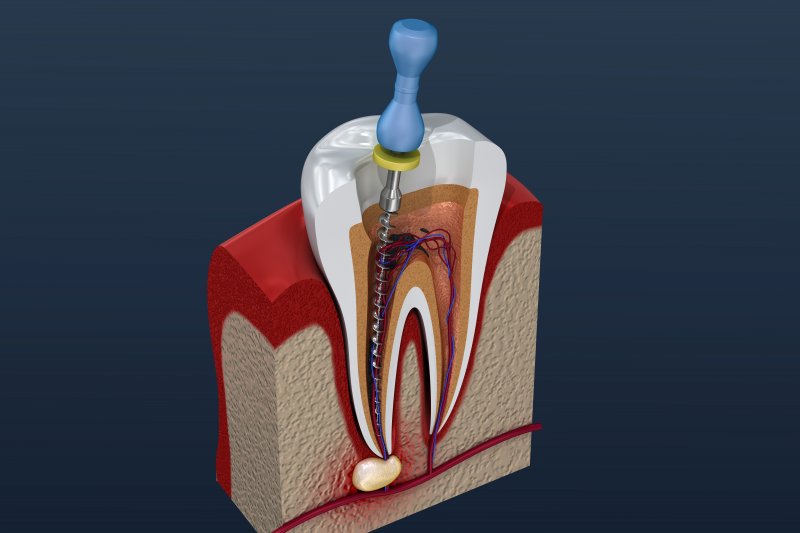

Root canal therapy treats infection inside a tooth, and it aims to clean and seal the inner tooth. Dentists use this procedure when pulp tissue becomes inflamed. Since treatment methods have changed, patients now see newer tools and materials during care. Here are several advanced techniques used in modern root canal therapy and how they work:
Acoustic Energy
Acoustic energy uses sound-driven movement, and it helps activate cleaning fluid inside narrow root spaces. This method improves fluid motion. Since a root canal contains small branches and irregular walls, direct file contact does not reach every surface.
During treatment, a clinician places an activation tip near the prepared canal, and the fluid begins to move rapidly. Debris loosens. Since the liquid shifts with more force, it reaches fins, isthmuses, and other hard-to-clean areas.
A typical acoustic approach includes a few steps, and each one supports canal debridement:
- Shape the canal
- Add irrigating solution
- Activate the fluid
- Refresh the solution
Targeted Fluid Vortex
Targeted fluid vortex systems direct irrigant in a controlled circular pattern, and they aim to clean the canal without forcing liquid past the root tip. The device forms a localized swirl. Because the motion stays concentrated near the treatment zone, the clinician gains more control over fluid behavior.
This method differs from standard syringe rinsing, and the fluid does more than flow in and out. It circulates rapidly inside the tooth. When the vortex forms inside the prepared canal, it lifts tissue remnants and dentin particles from the walls.
Clinicians typically use this technique after shaping, and they pair it with sodium hypochlorite or another substance. Timing matters when this method is involved. Since each solution performs a different task, the sequence affects smear layer removal and tissue dissolution.
Rubber-like Cement
Rubber-like cement refers to bioceramic or polymer-based sealing materials with flexible handling traits, and these products fill prepared root spaces after cleaning. The sealer adapts to canal walls. Since root anatomy varies from tooth to tooth, material flow and placement matter during obturation.
Many sealers work with gutta-percha, and the combination creates a dense root filling. Placement follows canal drying. When a sealer spreads into small irregularities, it reduces the open space within the treated canal.
Typical traits of these materials include:
- Smooth delivery
- Dimensional stability
- Total moisture tolerance
- Radiographic visibility
Advanced Devices
Advanced devices support diagnosis and treatment, and they help clinicians work with greater precision. Digital imaging guides planning. Since root anatomy often includes curves, branches, and calcified segments, clear visualization shapes each treatment step. When both tools guide the procedure, the clinician relies less on estimation alone.
Schedule a Root Canal Today
Advanced root canal methods use updated fluid activation, refined sealers, and precise imaging, and each technique addresses a different part of the treatment. The details matter. If you need an evaluation for tooth pain, swelling, or prolonged sensitivity, contact a dental office and request an exam. A dentist can review your symptoms, take images, and explain the treatment plan. Because early evaluation helps define the next step, schedule a root canal assessment today.
