
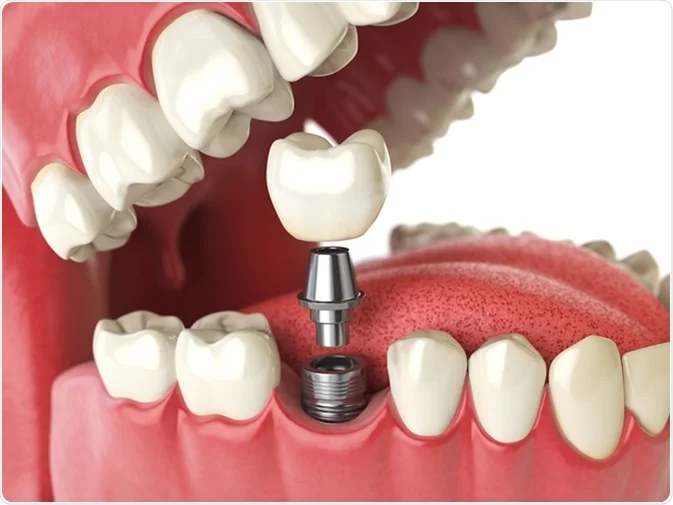

A dental implant is a titanium post that a dentist or oral surgeon places directly into the jawbone. It serves as an artificial tooth root, supporting a custom-made crown visible above the gumline. Three core components make up an implant; these include the post, the abutment connector, and the crown. Because the post integrates with the bone, the finished result closely resembles a natural tooth in both function and appearance. Here’s more information about the process and advantages of dental implants:
Following the Dental Implant Procedure
The dental implant process starts with a thorough consultation. Your dentist examines your mouth, reviews X-rays or 3D scans, and uses that data to map out a precise placement plan. If the jawbone lacks sufficient volume, the provider may recommend a bone graft before moving forward. Placement follows a successful evaluation. The surgeon places the post in the jawbone, and the gum tissue closes around it as it begins to heal.
Over the next several months, the bone bonds with the post through osseointegration, a biological process that forms a stable, long-term foundation. Once osseointegration is complete, the dentist attaches the abutment. This connector bridges the post and the crown. Some providers place it during the original surgery, while others may schedule it as a separate visit. A dental lab then fabricates a custom crown matched in shape and shade to your surrounding teeth, and the dentist secures it in place.
Reviewing Dental Implant Advantages
Dental implants offer several practical benefits that distinguish them from other tooth replacement options. Unlike removable dentures, implants remain fixed, and they do not rely on adjacent teeth for support the way a traditional bridge does. Dentists may highlight the following features when comparing choices:
- Stable fit: The anchored post keeps the crown firmly in place during meals and conversation.
- No adhesives needed: Implants require no pastes or bonding creams.
- Independent support: Each implant stands alone, leaving neighboring teeth untouched.
- Routine maintenance: Brushing and flossing an implant follows the same process as caring for natural teeth.
- Long-term design: With proper upkeep, implants provide a durable, long-lasting solution.
Individual results vary, so your dentist will explain how these features apply to your specific case and outline any limitations.
Preparing for Your Consultation
Preparation helps make your first appointment more productive. Write down your full dental history, including past extractions, treatments, or procedures, so the dentist can build a precise, well-informed plan. Bring a complete list of current medications, as certain prescriptions and health conditions sometimes affect treatment planning. If you use tobacco, disclose it; dentists factor that information into their approach. Ask your provider about the expected timeline so you can plan work and travel commitments accordingly. The full process typically spans several months, but the exact schedule depends on healing and any supplemental procedures.
Learn More About Dental Implants
Dental implants can enhance smiles by replacing missing teeth. They provide a fixed, low-maintenance solution, and they help restore your ability to chew comfortably. If you’re exploring tooth replacement, schedule a consultation with a qualified dentist today.
