
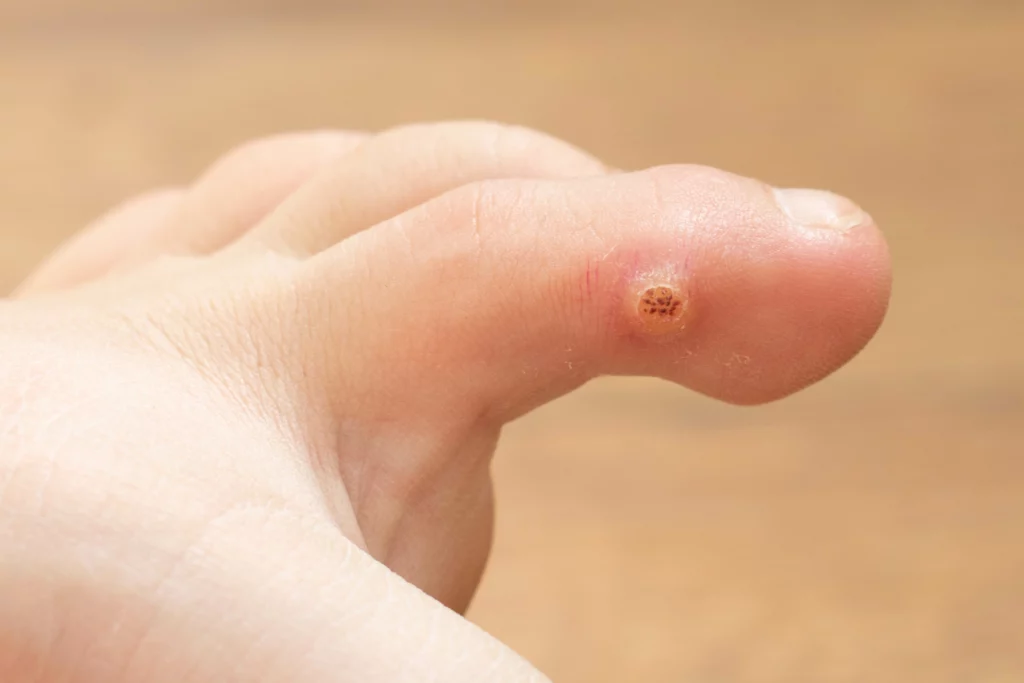

Warts are benign skin growths. They can appear anywhere on the body, but they usually form on the hands and feet. When these growths develop, they alter the skin’s texture and appearance. A person might feel pain if the wart grows on a weight-bearing area like the heel.
Wart Causes
Human papillomavirus causes warts. The virus enters the body through tiny cuts, and it causes cells to multiply rapidly. Because the virus thrives in warm environments, locker rooms pose a risk. Individuals contract the virus through direct contact, or they touch contaminated surfaces.
The immune system responds differently to the virus in different people. While some individuals fight off the infection easily, others develop visible growths. A scratch can spread the virus to other body parts, and this creates new growths. Children can get these skin lesions as well as adults.
Physical Symptoms
These growths change the texture of the skin. They feel rough to the touch and may look like small cauliflowers. If you look closely, you might see tiny black dots. These dots are clotted blood vessels, and they supply nutrients to the growth.
Growths on the feet can cause significant physical discomfort. Plantar lesions develop on the soles, and they push inward from the pressure of walking. This pressure causes sharp pain, which can make walking difficult.
Medical professionals classify these growths based on their location and shape. When doctors examine the skin, they look for distinct characteristics.
- Common growths appear on the hands with rough surfaces.
- Plantar lesions form on the soles of the feet.
- Flat growths develop on the face or legs.
These variations require different approaches to care.
Home Treatments
Many individuals try over-the-counter remedies first, such as salicylic acid. When you apply the acid daily, it slowly peels away the growth. The treatment takes up to several months, but it is effective for minor cases. Because the process is gradual, patience remains necessary.
Freezing sprays are another at-home option. These products use a mixture of gases, and they create extreme cold. As the cold destroys the tissue, a blister forms around the growth. The dead skin eventually falls off, and new skin grows beneath it.
Clinical Treatments
If treatment at home does not achieve the desired result, dermatologists offer stronger therapies for stubborn growths. Cryotherapy is a common medical procedure, and it uses liquid nitrogen. Liquid nitrogen is much colder than at-home sprays. It destroys the tissue more effectively.
The doctor applies the liquid directly, and the extreme cold kills the virus. Laser therapy provides another solution for thick lesions. The intense light heats the blood vessels, and it cuts off the nutrient supply. When the blood vessels close, the infected tissue dies.
Get Treatment for Warts
These skin lesions cause both physical discomfort and visible changes. The virus spreads easily, and it creates tough growths on various body parts. While at-home acids dissolve the skin gently, clinical freezing provides faster results. If you want to learn more about treatments for warts, consult a foot specialist near you.
