

Severe joint deterioration from arthritis can lead to persistent pain and restricted movement. When non-surgical treatments stop providing relief, medical professionals may recommend surgical intervention to restore mobility. Ankle replacement surgery is a recognized procedure designed to address these joint issues and improve overall physical function. Patients undergoing this operation typically need to modify their daily habits. Preparing for the transition period can help individuals adapt to new physical limitations.
What Is an Ankle Replacement?
Ankle replacement is an orthopedic procedure intended for individuals experiencing severe joint deterioration; this is often caused by arthritis. Surgeons perform this operation to remove damaged bone and cartilage from the joint space. Depending on the severity of the damage, a patient may undergo either a partial or a total joint replacement.
During a partial replacement, the surgeon preserves most of the natural joint components. They typically replace only one specific surface within the joint. To facilitate smooth movement and protect the remaining bone, surgeons insert artificial spacers to act as artificial cartilage.
A total replacement requires the removal of the affected sections of the tibia and the talus. The orthopedic surgeon then installs metal rods into the leg bones and attaches artificial metal joint surfaces. Plastic discs are placed between these new metal components, aiming to simulate natural joint function. This comprehensive approach rebuilds the structure of the ankle entirely.
What Is It Used For?
The primary goal of an ankle replacement is to decrease persistent pain associated with joint deterioration. Compared to ankle fusion, which locks the joint in place, a replacement aims to restore a patient’s natural range of motion. This restoration allows individuals to remain active and perform daily tasks with less stiffness. With a functional and pain-free joint, patients can gradually return to low-impact physical activities.
What Should You Expect After?
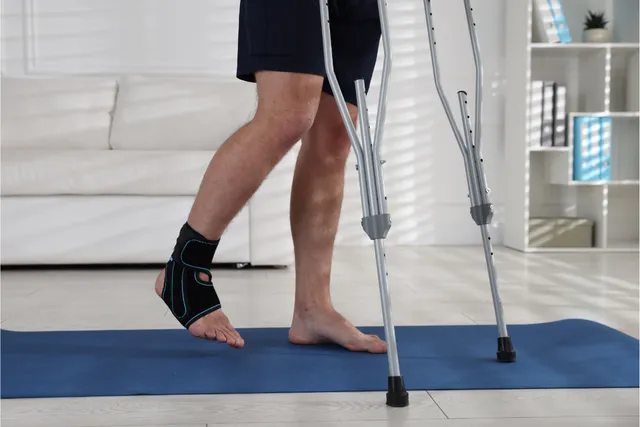
The recovery process following joint surgery dictates several temporary lifestyle modifications. Following the operation, patients typically complete a short hospital stay for monitoring and pain management. Medical providers typically place the treated leg in a splint to immobilize the area, and patients must avoid bearing weight on the affected leg during the initial healing phase. This restriction necessitates the use of crutches, walkers, or knee scooters for several weeks.
Around the four-week mark, surgeons may permit patients to bear roughly half of their body weight on the recovering leg. Reaching full weight-bearing capacity generally takes a couple of months, and sometimes longer, depending on individual healing rates. Physical therapy plays a significant role in the rehabilitation phase. Attending regular therapy sessions helps patients rebuild strength and improve the joint’s flexibility. Adhering to the prescribed exercise routine helps facilitate the return to daily activities.
Speak Further With Your Surgeon
Every patient experiences a unique timeline for healing, and scheduling routine follow-up appointments keeps your recovery on track. If you have specific questions about modifying your daily routine, practical adjustments to support bone health, or returning to work, reach out to your medical provider. Proper medical guidance provides the clarity needed to navigate your lifestyle changes successfully.
