

Most of the anxiety around a first skin cancer check comes down to one thing: nobody tells you what the appointment actually looks like. So here it is, laid out as it really unfolds, from the moment you book to the moment you get results.
Before you arrive
A few days out Skip fake tan and nail polish in the lead-up to your appointment. Both can obscure or mimic changes a clinician needs to see clearly, from skin tone to the base of your nails, which is one of the less obvious places skin cancer can occur.
The night before Take five minutes to mentally run through anything you’ve noticed: a spot that itches, one that’s changed shape, a mark that bleeds without being knocked. You don’t need a formal list, just enough to mention it without relying on memory in the room.
Walking in No referral is required at most clinics, though bringing one from your GP can sometimes affect your Medicare rebate. Reception will usually ask about your sun exposure history and any family history of skin cancer before you’re seen, so it helps to have rough answers ready.
During the appointment
Minute 0 to 5: the conversation Your clinician will ask about the spot that brought you in (if there is one), your skin type, past sunburns, and family history. This isn’t small talk, it directly shapes what they look for.
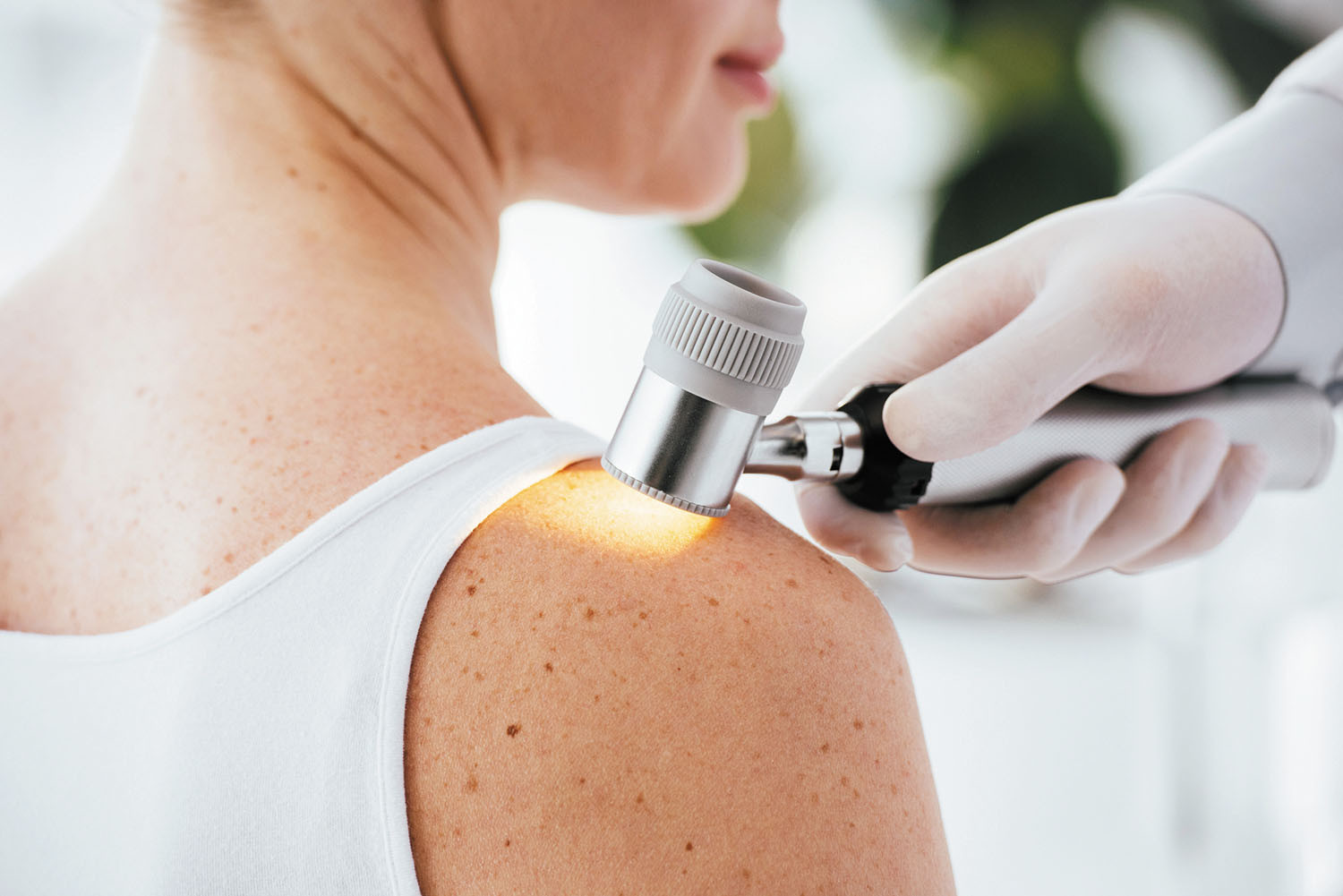
Minute 5 to 20: the examination You’ll typically be asked to undress to your underwear, with a gown provided. The clinician then works systematically over your entire body, including places people rarely check themselves: the scalp, behind the ears, between the toes, the soles of the feet. A handheld dermatoscope, a magnifying tool with polarised light, lets them see pigment structures invisible to the naked eye.
Here’s roughly what they’re assessing on any spot that catches their attention:
| Sign | What the clinician is checking |
| Asymmetry | Whether one half of the lesion mirrors the other |
| Border | Smooth and defined, versus notched or blurred |
| Colour | Single even tone, versus multiple or uneven shades |
| Diameter | Generally over 6mm draws more attention, though smaller lesions are still assessed |
| Evolving | Any recent change in size, shape, colour, or sensation |
Minute 20 onward: if something needs a closer look Not every flagged spot needs action, plenty turn out to be sun spots or harmless keratoses, noted for future reference rather than treated. If something does warrant investigation, your clinician will explain what a biopsy involves before doing anything: a small local anaesthetic, a brief tissue sample, and a straightforward recovery.
After the appointment
Same day You’ll usually leave with a clear picture of what was found, even if lab results are still pending. Nothing should be left as a vague “we’ll be in touch.”
The following days to two weeks If a biopsy was taken, pathology results generally arrive within this window. Your clinic should tell you upfront roughly how long to expect and how you’ll be contacted.
Ongoing Whatever the outcome, this appointment now becomes your baseline. Future checks get easier to interpret because there’s something concrete to compare against, rather than relying on memory of what looked normal last time.
The gap between what people imagine this appointment involves and what it actually involves is usually the real barrier to booking one. It’s shorter, plainer, and less invasive than most people expect, and a proper visit to a dedicated skin cancer clinic remains the most effective way to catch skin cancer early.
FAQs
Does it hurt?
No. The examination itself is entirely visual and dermoscopic, non-invasive unless a biopsy is needed, which would always be explained and consented to first.
How long does the appointment take?
Most full-body checks run somewhere between fifteen and thirty minutes, depending on how much needs closer attention.
Do I need a referral to book?
Not usually. Many clinics accept direct bookings, though a GP referral can sometimes affect your Medicare rebate, worth checking with the clinic first.
Do children or teenagers need skin checks?
Sometimes, particularly where there’s a strong family history of melanoma or a history of significant sunburn. It’s worth discussing timing directly with the clinic.
Is a skin cancer check the same as a cosmetic dermatology consultation?
No. A skin cancer check is a medical examination focused on detecting cancerous or pre-cancerous changes, separate from cosmetic services even where a clinic offers both.
What happens if the clinician finds something?
Most findings are benign and simply noted for future reference. If something needs closer investigation, a biopsy is discussed and explained before anything proceeds, and results typically follow within a couple of weeks.
The takeaway
None of this is as involved as it sounds from the outside. If it’s been a while since your last check, the appointment itself is a far smaller step than the anticipation of it usually suggests.
