
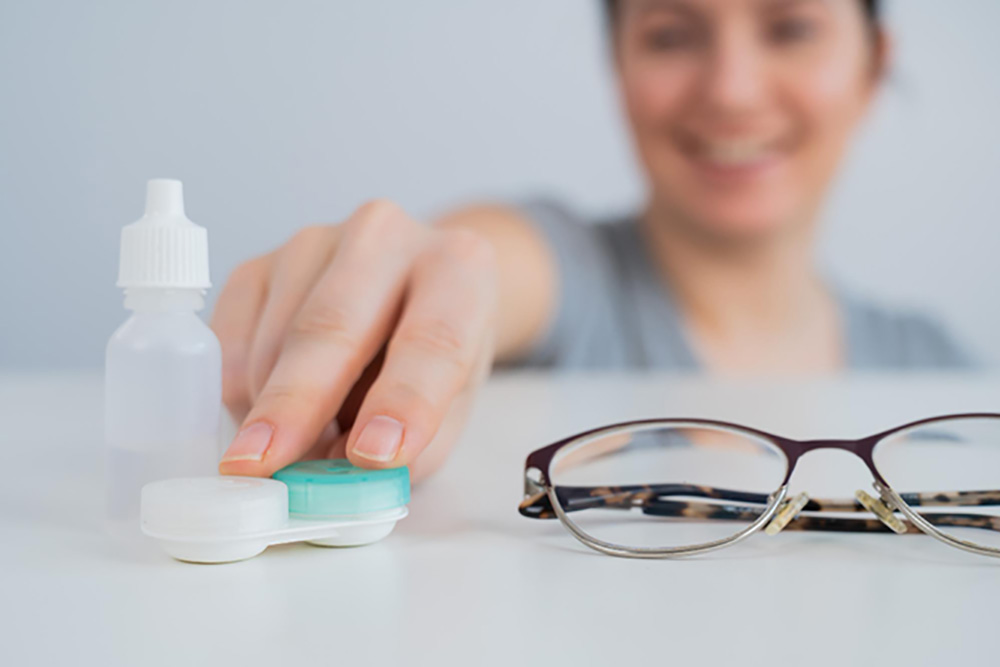

Contacts improve vision without the need for eyeglasses, but they may also cause eye irritation if not used or cared for properly. Dryness, extended screen time, and poor lens hygiene can increase the risk of red eyes and digital eye strain. Here’s a closer look at how contacts can affect eye comfort and contribute to red eyes:
Reducing Lens-Related Eye Dryness
Contact lenses require adequate moisture to maintain a comfortable fit all day. They naturally draw tears from the surface of the eye, which can lead to rapid tear evaporation. When the protective tear film becomes unstable, the eyes feel excessively dry and gritty. The specific material of the contacts plays a key role in moisture retention. Some standard materials absorb liquid like a sponge, but other advanced silicone options retain hydration much more effectively. If a patient wears lenses with low moisture retention properties, they will likely experience localized irritation.
Managing Screen Time and Blinking
Digital devices significantly alter natural visual habits. The rate of blinking drops significantly during computer use. When users stare intensely at computer monitors, their blinking becomes infrequent and incomplete. Here’s what happens when patients stare at digital screens for extended periods:
- Reduced blink rate: Screen viewing drastically lowers the natural blink rate. The eyelids do not spread tears evenly, and the contact lenses dry out rapidly.
- Incomplete blinking: An incomplete blink leaves the lower portion of the eye completely exposed. This partial closure causes irritation as the exposed lens surface dries out over time.
- Visual concentration: High cognitive demand forces the eyes to focus intensely. This intense concentration restricts natural eye movements, and the eye muscles become deeply fatigued.
Screen users must actively manage their conscious blinking habits whenever they wear contacts.
Improving Hygiene and Wearing Habits
Proper daily hygiene is fundamental for all contact lens wearers. Users must wash their hands thoroughly before handling contacts, or they risk introducing harmful bacteria to the eye. If dirt accumulates on the delicate lens surface, the eye becomes inflamed and red. Extended lens wear deprives the cornea of key oxygen, and this may lead to severe medical complications. Patients often experience severe irritation when sleeping in lenses designed for daily removal.
Using the correct cleaning solution removes harmful daily buildup. Contact solutions disinfect the lens material, but users must never reuse old liquid in their storage case. Make sure you replace the storage case regularly to prevent bacteria from multiplying inside the compartments.
Providing Relief and Preventing Discomfort
Patients can adopt several daily habits to relieve visual discomfort. Proactive measures protect the eye surface, and they can prevent dry eye symptoms from worsening over time. Individuals should review the following strategies to reduce digital eye strain:
- The 20-20-20 rule: You should look at an object twenty feet away for twenty seconds, and you must do this every twenty minutes. This practice resets your visual focus while it encourages normal blinking patterns.
- Artificial tears: Lubricating eye drops add necessary moisture to the ocular surface. These drops supplement natural tear production, and they rehydrate dry contact lenses immediately.
- Workspace adjustments: Ergonomic monitor placement can reduce eye strain. You should position the screen slightly below eye level, so your upper eyelids cover more of the ocular surface.
Consistent care keeps the lenses moist, and it supports overall visual clarity throughout the day.
Schedule Your Contacts Fitting Appointment
Contact lenses require a customized fit to maintain optimal ocular health. Ill-fitting lenses exacerbate dry eye symptoms, making an accurate professional evaluation highly helpful. Optometrists measure the curvature of your eye to make sure the lenses rest properly on the tear film. Regular eye examinations track subtle changes in your vision and eye health; a professional can adjust your optical prescription and recommend better lens materials. Contact a qualified optometrist near you to schedule your contacts fitting appointment today.
