
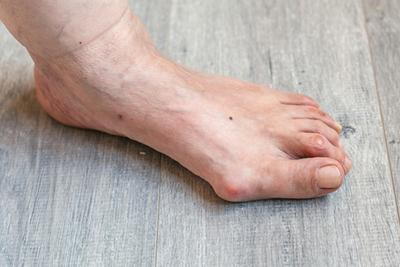

A bunion develops when the joint at the base of the big toe gradually shifts out of alignment, forming a bony bump along the inner edge of the foot. This condition rarely remains static; it often progresses slowly over time. When you understand how an untreated bunion may advance, you gain a clearer perspective on why timing matters, and that awareness helps guide your next steps. Here’s information about the long-term effects of untreated bunions and the available treatment options:
Tracking Structural Progression
A bunion typically begins with a small angular change at the big toe joint, and that angle often increases over time. The bony prominence becomes more visible as the joint continues to shift under consistent pressure. This gradual movement reflects the ongoing strain that prevents the alignment from correcting on its own. Over time, the surrounding tissues and tendons adapt to the new positioning; that adaptation can further reinforce the structural change. Because the foot relies on a balance among interconnected structures, a shift in one area sometimes affects others. The progression is usually slow, but the cumulative change becomes more noticeable as the bump grows more pronounced.
Advancing bunions do not always remain isolated to the big toe. As the big toe drifts inward, it may crowd the second toe, and that pressure gradually alters the position of neighboring toes. This crowding sometimes triggers a chain reaction that extends beyond the original joint. When toes overlap or press together, smaller joints take on additional strain, and secondary changes may develop. Some toes begin to bend, while others sit unevenly across the foot. Each shift connects back to the original misalignment, helping explain how a single bunion can reshape the overall foot structure.
Influencing Footwear and Mobility
A widening bunion changes the shape of the foot, which impacts how shoes fit. Individuals may notice various effects, including:
- Reduced space in the forefoot and toe box
- Increased pressure from narrow or structured footwear
- Difficulty finding properly fitting shoes over time
Footwear adjustments represent only part of the overall impact. A misaligned big toe joint also plays a role in gait mechanics, since it bears significant load with each step. When alignment shifts, weight distribution across the foot may change; this altered pattern sometimes places additional strain on surrounding structures. Over time, these combined effects have the potential to influence movement patterns and daily activity choices.
Seeking Professional Evaluation
When evaluating a bunion, a podiatrist examines the joint, reviews alignment, and assesses the overall condition of the foot. This clinical evaluation provides more detail than visual inspection alone, and it supports informed decision-making. A provider may also use imaging to measure the joint angle and document the current structural position. With this information, the provider is able to recommend appropriate treatment options. These may include footwear modifications, padding, and orthotic devices. A surgical consultation is also beneficial in some cases.
Find Treatment for Bunions
An untreated bunion rarely stays static, and the structural shift at the big toe joint may extend its influence across the foot over time. From changes in surrounding toes to effects on footwear and mobility, the progression traces back to that initial misalignment. If you notice a bunion developing, schedule a professional evaluation to learn more about your options.
