
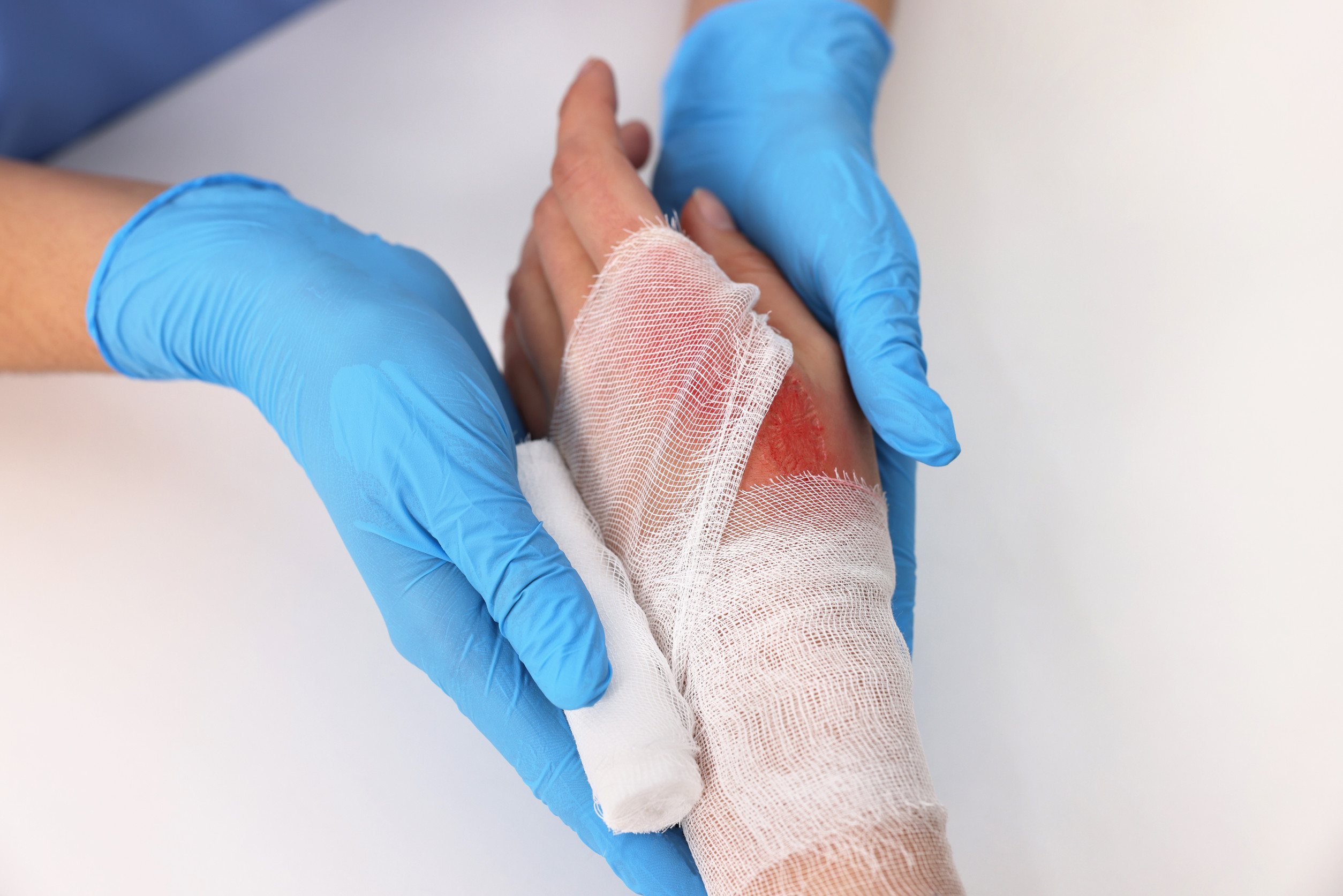

Chronic wounds fail to heal through the normal stages within an expected timeframe. They may stem from underlying conditions, and they demand structured treatment plans. Since these wounds persist for weeks or months, clinical attention helps reduce complications. Here are several major injury types and the wound care strategies tied to each one:
Venous Wounds
Venous wounds form when leg veins struggle to return blood to the heart. Pressure builds in the lower limbs, and fluid leaks into surrounding tissue. The skin breaks down near the ankle in most cases.
Wound care treatment targets circulation and fluid management. Compression therapy remains the standard approach, and clinicians adjust it to each patient. When pressure decreases, the tissue receives steadier blood flow. Care steps include:
- Applying graduated compression wraps
- Elevating the legs during rest
- Cleaning the wound bed regularly
Arterial Wounds
Arterial wounds result from restricted blood flow through the arteries. Tissue lacks oxygen, and cells begin to die. These wounds typically appear on the toes, heels, or outer ankle.
The pain frequently worsens at night or when legs are raised. Clinicians assess blood flow first, and they may order imaging studies. Since oxygen delivery drives recovery, treatment focuses on restoring circulation. Vascular specialists sometimes perform procedures to reopen narrowed vessels.
Daily management protects the surrounding skin. Keep the area dry, avoid tight footwear, and report color changes quickly. A clinician monitors the wound, and adjustments follow each visit. Early reporting may reduce the risk of tissue loss.
Diabetic Ulcers
Diabetic ulcers develop on the feet of people with elevated blood sugar. Nerve damage reduces sensation, so small injuries go unnoticed. Patients may walk on an open wound without feeling pain, and this delays detection.
Foot inspection forms the foundation of daily care. Clinicians check for pressure points, and they remove dead tissue when needed. Since poor circulation slows repair, blood sugar control supports the healing process. Offloading devices are used to reduce strain on the affected area. Diabetic ulcers:
- May develop on the soles of the feet or toes
- Can be painless due to nerve damage
- May appear as a shallow, red wound or a deeper ulcer with exposed tissue
- Can be accompanied by signs of poor circulation, such as cold or discolored skin
- Can have a high risk of infection if not promptly treated
Atypical Wounds
Atypical wounds do not match the standard venous, arterial, or diabetic patterns. They may stem from infection, autoimmune conditions, or medication effects. Diagnosis takes longer, and providers often order a biopsy.
A biopsy identifies the underlying cause. Clinicians review medical history, and they rule out major wound types first. Since the source varies widely, treatment plans differ from patient to patient. Specialists may combine wound care with systemic therapy.
Schedule Wound Care Near You
Chronic wounds need targeted treatment based on their cause. Venous, diabetic, arterial, and atypical wounds each follow distinct patterns, and each requires a specific plan. A clinical evaluation identifies the wound type and guides next steps. Contact a wound care provider today to schedule an assessment.
