
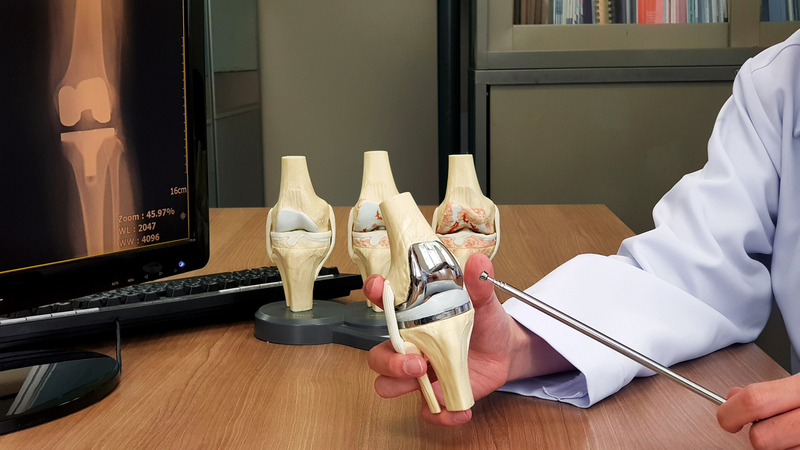

An orthopedic surgeon diagnoses and treats problems in bones, joints, ligaments, and muscles, and knee arthritis is one significant focus. These doctors study joint structure in detail. When knee damage limits walking, sleep, or daily tasks, the surgeon guides each step of the surgical process. Here is more information about the role of these doctors in knee replacement surgery:
Confirming Need for Surgery
The orthopedic surgeon reviews your symptoms, and the exam helps narrow the source of pain. X-rays show joint space loss. If swelling, stiffness, and failed nonsurgical care continue, the surgeon may recommend knee replacement.
The visit typically includes a physical exam, medical history, and imaging review, and each part adds detail. The surgeon checks alignment. Since knee pain may come from arthritis, injury, or deformity, the diagnosis must match the actual joint problem.
The surgeon also reviews prior treatment, and that record shows how the knee responded over time. Standard measures include:
- Anti-inflammatory medicine
- Physical therapy
- Various injections
If those steps no longer control pain or function, surgery may become the next option.
Removing Damaged Cartilage
During surgery, the orthopedic surgeon exposes the knee joint and prepares the damaged surfaces. This step follows a planned sequence. Since worn cartilage creates friction inside the joint, the surgeon removes damaged cartilage and a small amount of bone.
The surgeon uses precise tools, and each cut follows the shape of the implant system. Healthy bone stays in place. When bone removal matches the surgical plan, the implant has a more stable surface for placement.
The surgeon also balances the soft tissues, and that work affects how the knee moves after surgery. Ligaments guide motion. If one side of the joint feels too tight or too loose, the surgeon adjusts the tissues before moving on.
Implanting Components
After bone preparation, the surgeon places trial components and checks fit, motion, and alignment. Trial parts help guide final choices. Since each knee has different anatomy, the surgeon selects component sizes that match the joint.
The final implants replace the damaged joint surfaces, and they typically include metal parts and a plastic spacer. Some systems also use a patellar component. When the parts sit in proper position, the knee has a smoother gliding surface.
Providing Rehabilitation
After surgery, the orthopedic surgeon monitors recovery and works with therapists, nurses, and follow-up staff. Rehabilitation starts early. As swelling, pain, and weakness affect movement, the care team tracks progress closely.
Your recovery plan may include walking practice, range-of-motion work, and strength exercises, and each task has a clear purpose. A simple home plan typically includes:
- Ice packs
- Elevation
- Walks
If you follow the schedule given by your care team, you may better understand what to do each day.
The surgeon also checks the incision, reviews pain control, and watches for signs of infection or blood clots. Follow-up visits matter. When your knee bends and straightens more easily, the surgeon may update activity instructions.
Visit an Orthopedic Surgeon
If knee pain limits daily movement, an orthopedic surgeon can evaluate the joint and explain your treatment options. Since knee replacement involves diagnosis, surgery, and rehabilitation, the surgeon’s role extends far beyond the operating room. If you need answers about ongoing knee pain, schedule an appointment with an orthopedic surgeon. Bring your records, and describe your symptoms clearly.
