

People are most comfortable when they’re in their own space that they call home. This is especially true when they’re struggling with their health, a cold and clinical hospital bed is the last thing people want to spend their time in. The facility-based approach is not prepared to handle the inevitable uptick in senior people looking for care and families currently making care arrangements are struggling with this deficit.
Why personalized care produces better outcomes
The well-worn institutional model was created for maximum efficiency. It runs on schedules, shared spaces, rotating staff. It does its job – it keeps people alive and medically managed. What it fails to do is see the individual.
So-called person-centered care operates in a different way. Instead of creating a care plan based on a shared diagnosis, it starts with the person themselves: their unique personality, their story, the myriad idiosyncratic things that make life meaningful to them. A former teacher and a retired mechanic could have the same health needs but completely different emotional ones. The same box-ticking ‘care plan’ won’t cut it.
When older adults are supported to stay in surroundings which reflect their own lifestyles, routines, and preferences, they report less pain, recover faster from illnesses, and stay healthier for longer. For those living with dementia, it can even slow down cognitive decline. They are more likely to maintain their identity and their independence.
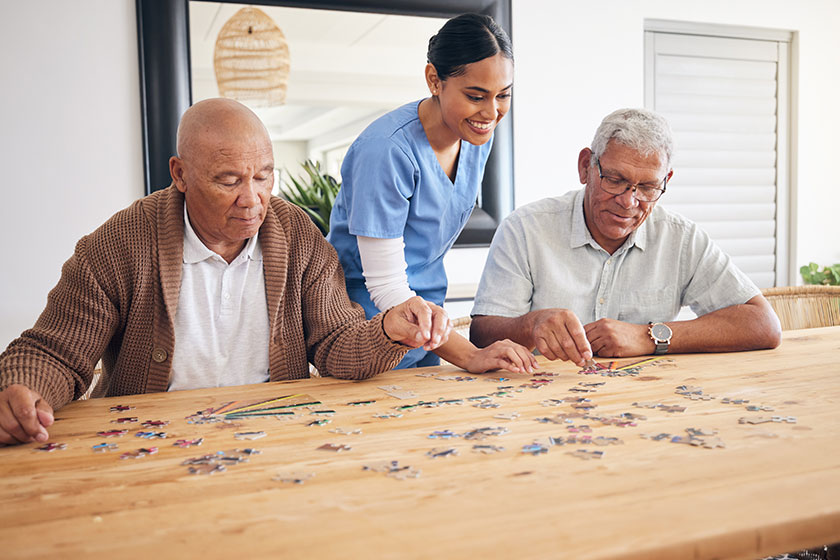
Despite being all but ignored by policy and businesses, loneliness is possibly the largest health risk for older people and institutional care is the worst possible place to address this. A scheduled staff member will never have the time to sit and play cards with someone who is anxious or bored and engage with them meaningfully. But this isn’t touchy-feely window-dressing; it’s medically necessary.
The workforce question can’t be ignored
A future that involves care at home in some form relies heavily on the caregivers providing that support. They are the frontline workers in whatever the new model becomes. Regions with growing older adult populations are seeing this play out at the local level. Anyone looking at caregiver jobs philadelphia will find an industry that’s actively expanding and increasingly recognizing that the quality of care depends on the quality of the people delivering it. In too many cases, they’re asked to do the job for less than a living wage, without benefits or consistent hours. The turnover is massive. The strain on the individuals left behind both unsustainable and inhumane.
Technology is an enabler, not a replacement
Wearable devices and remote health monitors have transformed the scope of home-based senior care. Previously, detecting issues such as falls, cardiac irregularities, or sleep disturbances required continuous clinical monitoring, but now these issues can be identified through data. Telehealth platforms enable care teams to detect and address problems before they turn into emergencies.
The impact on caregivers is immense. Less time spent manually monitoring vital signs or trying to identify trends means more time that can be devoted to the person itself. The technology will have the data, the caregiver will have the relationship.
This is the model we need to work toward – one in which digital solutions take over the monitoring so that highly skilled home health aides can focus on the overall, holistic care that no machine will ever be able to provide.
Home-based care reduces readmission risk
Recovery after surgery is a very obvious situation where it is far better to be at home than in a medical facility if that’s an option. The challenge is that recovery from surgery is also incredibly hard to manage from home unless you have a good amount of support. Better post-acute support allows patients to receive the care they actually need in the lowest cost and most familiar setting, which is almost always the home. That support usually looks like a caregiver visiting once or twice a day to help with wound care, medication timing, mobility, and just keeping an eye on whether something isn’t healing the way it should. It’s not glamorous work, but it’s the difference between a patient recovering steadily and one ending up back in A&E within a fortnight.
The real shift is cultural
The transformation happening in senior care goes beyond changing how care is provided. It’s about realizing that for the majority of people, the best model is to age where they live. This isn’t the best option because it happens to be cheaper or because it’s logistically simple, but because it’s what people prefer and what often results in the best care possible.
An industry that can implement this model on a large scale, while also prioritizing well-trained and well-supported caregivers, is preparing for the future. Families that are currently making decisions about care deserve more than just the next available bed. They deserve a personalized plan for their loved one.
