
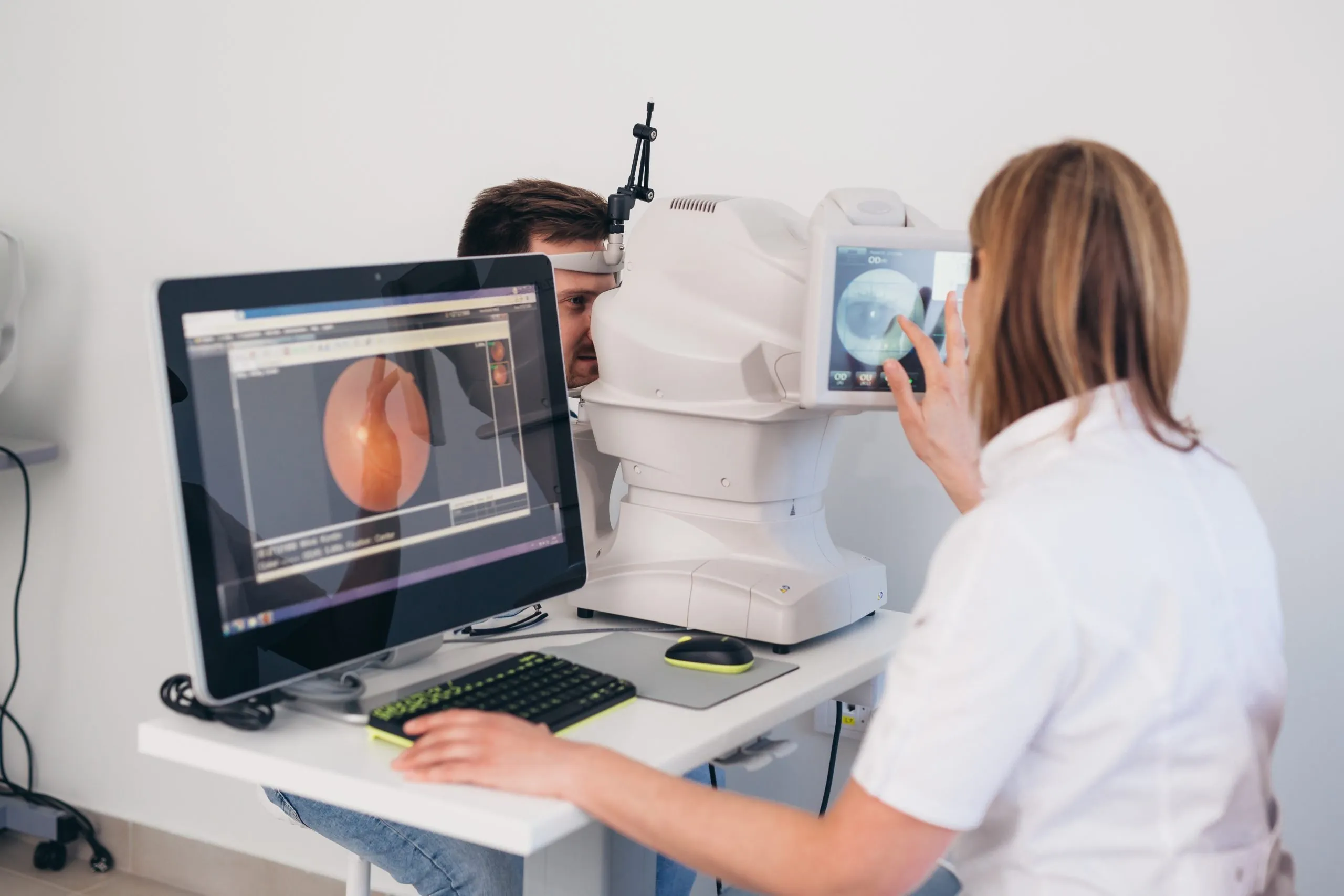

As individuals age, changes within the eye can lead to various visual impairments. Retina specialists diagnose and treat conditions that affect the back of the eye. Their focused expertise allows them to evaluate microscopic changes in the retinal tissue and utilize advanced imaging technologies. By identifying these microscopic changes early, these specialists can develop targeted intervention plans.
Macular Degeneration
Age-related macular degeneration affects the central portion of the retina, which is known as the macula. The macula controls detailed, straight-ahead vision necessary for reading, recognizing faces, and driving. A retina specialist can categorize this condition into two types: dry and wet. The dry form involves the thinning of the macula and the accumulation of tiny deposits called drusen. Specialists monitor this progression through regular dilated eye exams and specialized imaging. They often guide patients on lifestyle adjustments and specific dietary supplements, formulated to slow the progression of the disease.
The wet form involves the growth of abnormal blood vessels beneath the retina. These vessels leak fluid and blood, which leads to rapid central vision loss. Retina specialists manage wet macular degeneration using specific therapies. Some injections deliver medication directly into the eye to reduce the growth of abnormal blood vessels and minimize fluid leakage. By administering these treatments on a regular schedule, the specialist works to stabilize the retinal structure and prevent further visual decline.
Cataracts
Cataracts typically present as a clouding of the eye’s natural lens, which sits in front of the retina. Eye specialists usually perform cataract surgery. Before a cataract extraction is performed, a retina specialist may need to evaluate the patient to verify that the retina is healthy enough to support improved vision after the cloudy lens is removed. A dense cataract can obscure the view of the retina, making it difficult to diagnose underlying retinal conditions. Once the cataract is removed, the retina specialist may properly examine the back of the eye.
Retinal Detachment
Retinal detachment occurs when the retina separates from its underlying supportive tissue. This condition is a medical emergency that can lead to permanent vision loss if left untreated. Aging naturally causes the vitreous gel inside the eye to shrink and pull away from the retina. This pulling can create a tear, allowing fluid to pass through and detach the retina.
Patients often notice a sudden increase in floaters, flashes of light, or a dark shadow appearing in their peripheral vision. When a patient presents with these symptoms, a retina specialist immediately conducts a thorough examination to locate the exact position and extent of the tear or detachment. Treatment requires precise surgical intervention. Specialists utilize several techniques to repair the detached tissue. For more severe cases, they perform procedures such as pneumatic retinopexy or a vitrectomy. These surgeries reattach the retina to the back wall of the eye, restoring the necessary blood supply and aiming to preserve the patient’s remaining vision.
Meet With a Retina Specialist
Scheduling a consultation with a retina specialist requires preparation. During your visit, the clinic staff will administer dilating eye drops to widen your pupils, allowing the specialist an unobstructed view of the back of your eye. Dilation usually lasts for several hours, which can make your eyes sensitive to light and blur your near vision. Bring a list of your current medications, any previous vision records, and a summary of your specific visual symptoms. Providing this detailed history allows the specialist to form a more complete picture of your visual health and formulate an effective strategy for your ongoing care.
