
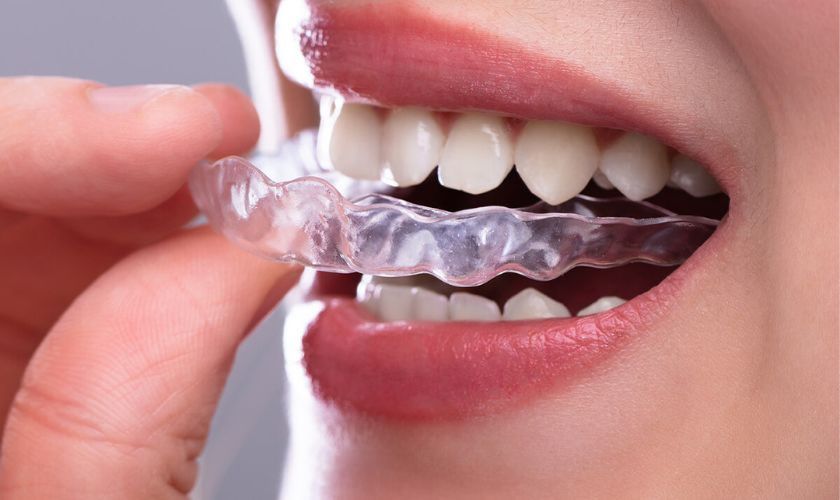

Many adults choose Invisalign to address mild to moderate alignment issues. The treatment uses a series of custom clear aligners that gradually shift the teeth into position, and patients remove the trays while eating and brushing their teeth. Maintaining good oral hygiene throughout the process is key. Food particles and bacteria can become trapped around the teeth and aligners, increasing the risk of cavities and gum irritation. Here is more information on maintaining oral health while using Invisalign®:
Understanding Your Orthodontic Treatment
Invisalign® is an orthodontic treatment designed to correct issues such as crowded, overlapping, or misaligned teeth. This is done by using a series of clear plastic aligners. Each set of aligners is custom-made to fit the patient’s teeth. They gradually guide them into improved alignment over time. Because the trays are removable, patients can continue eating their normal meals and maintain their regular brushing and flossing.
Successful treatment depends on wearing the aligners consistently throughout the day. Most patients wear their trays for 20 to 22 hours daily and switch to a new set of aligners according to their treatment schedule. The length of treatment varies based on the complexity of the alignment issues. Many patients complete the process within 12 to 18 months.
Cleaning Your Plastic Aligners
Patients should clean their Invisalign trays regularly to help maintain oral hygiene and protect the aligners from damage. After removing the trays for meals, patients should rinse them with water and place them in a protective case to reduce the risk of loss or accidental breakage. Aligners can be cleaned gently with a soft toothbrush to remove buildup and debris, but hot water should be avoided because high temperatures often warp the plastic material and affect the fit of the trays.
Brushing After Eating Meals
Food particles and bacteria often remain on the teeth after meals. This makes daily oral hygiene especially beneficial during Invisalign treatment. When aligners are placed over unbrushed teeth, plaque and debris can become trapped against the enamel. This creates an environment where bacteria are able to multiply more easily. Over time, this buildup increases the risk of cavities, gum irritation, and bad breath.
Patients should brush their teeth after every meal before reinserting their aligners to help keep the mouth clean throughout treatment. Flossing also helps remove trapped food particles from between the teeth and along the gumline where brushing may not reach completely. Maintaining consistent oral hygiene supports healthier teeth and gums while allowing the orthodontic process to progress more safely and effectively.
Scheduling Regular Dental Cleanings
Regular dental visits are a key part of Invisalign® because they allow providers to monitor alignment changes and support the treatment is progressing correctly. During scheduled checkups, dentists evaluate how the teeth are shifting and determine when patients should transition to the next set of aligners. Professional dental cleanings also help remove plaque and tartar buildup that daily brushing may miss, especially in hard-to-reach areas around the teeth and gums. These routine appointments allow the dental team to examine the mouth for signs of gum disease, tooth decay, or other oral health concerns that could interfere with treatment.
Book Your Invisalign® Appointment Today
Invisalign® helps improve dental alignment while also supporting better long-term oral health. Maintaining consistent brushing, flossing, and aligner care throughout treatment helps protect the teeth and gums from plaque buildup, cavities, and irritation. Schedule a consultation today to learn more about clear aligner treatment and proper care during the orthodontic process.
